
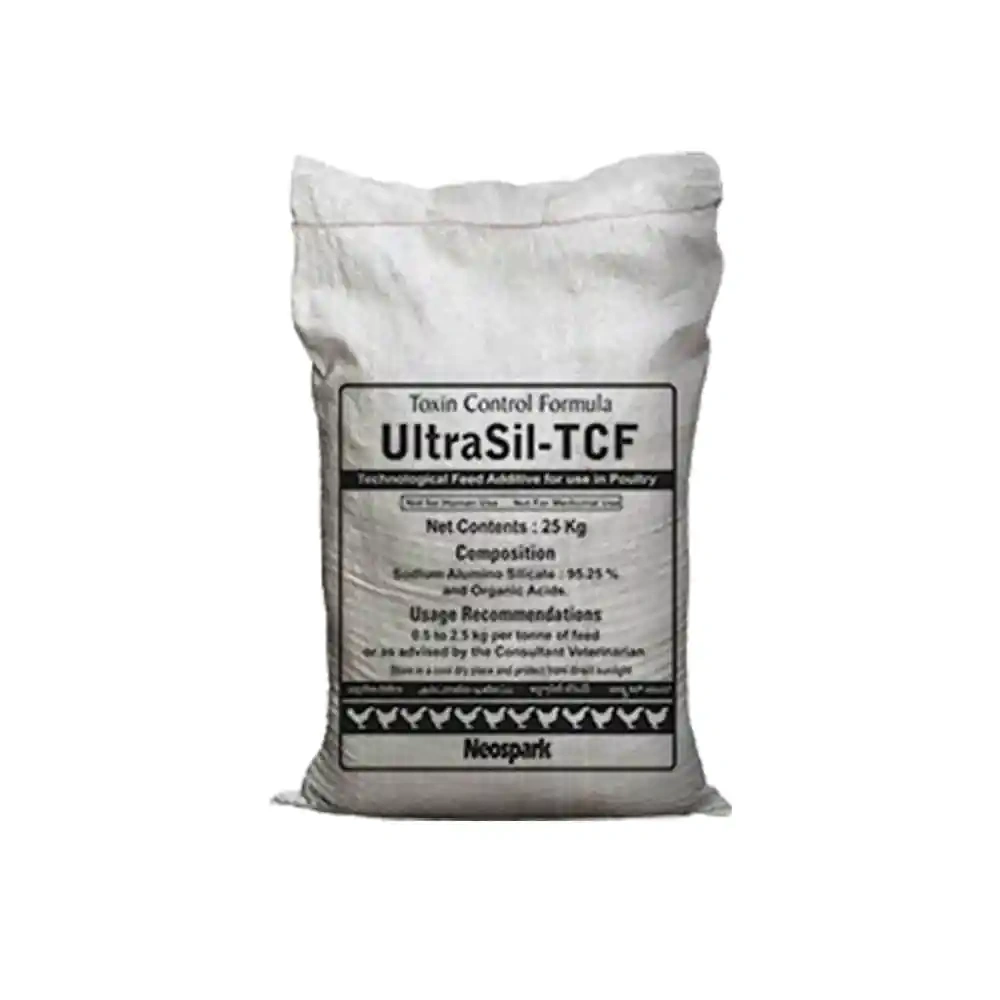
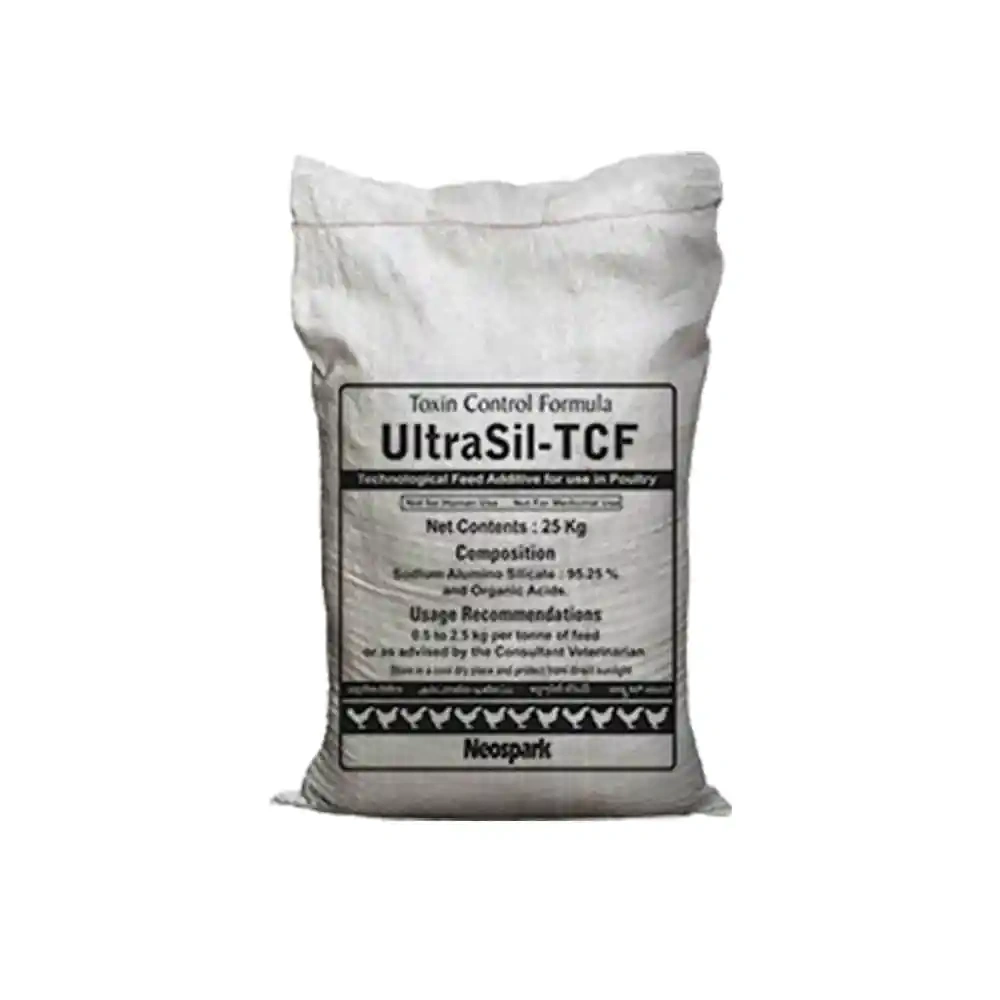
UltraSil-TCF
₹1,891.00
- Sold by: MyAnimal Raipur
- COD available for orders between ₹800-₹4,000
- Free Delivery on orders ₹1,000 and above!
Mycotoxicosis is the most devastating and wide-spread non-infectious disease affecting all species of livestock and poultry.
Mucotoxicosis affects all breeds and all age groups simultaneously.
Mycotoxins are thermostable, induce cumulative effects and pose problems of break down of vaccine immunity on account of immunosuppressive effects.
Aflatoxins besides, reducing the production potential of the birds in terms of egg and meat cause acute, sub acute and chronic diseases in poultry.
Out of all the aflatoxins B1 is the most toxic followed by G1, B2 and G2. The LD50 of aflatoxin is 0.03 mg/kg body weight.
Benefits:
- Anorexia, reduced feed intake, cyanosed combs, stunting, ruffled feathers, droopiness, poor growth, loss of weight, icterus and wide disseminated haemorrhages, degeneration and necrosis followed by biliary hyperplasia and cirrhosis of liver.
- General biological effects of aflatoxin are carcinogenic, hepatotoxic and nephrotoxic in nature.
- Low concentration of the toxin in birds causes reduced resistance to diseases with moist vent, diarrhoea-loose green motions and dehydration.
- Chicks receiving toxin show signs of hypo-proteinemia, regression of Bursa of Fabricius and Thymus causing immuno suppression and increased vulnerability to infections and drug failure.
- Aflatoxin has also been found to induce mutagenesis and carcinogenesis, reduced hatchability, decreased feed conversion, suppressed level of production, impaired metabolism of carbohydrate, fat, protein, calcium, phosphorus and vitamin D.
- Reduced tissue integrity and increased susceptibility to bruising, gizzard erosion, crop bound condition and leg weakness.
- Disturbance in Calcium and Vitamin D3 metabolism resulting in fragile bones and shell formation, staggering gait with signs of respiratory distress.
- Poor pigmentation of yolk and meat, sudden mortality going up to 10 to 20%.
How UltraSil-TCF works?
- UltraSil-TCF selectively adsorbs and immobilises the mycotoxins when administered through feed.
- Forms a stable complex and remains stable in pH range of 2 to 10. Ensures that toxins pass out harmlessly through the intestinal tract of the bird.
- Has high affinity for aflatoxins and drastically reduces bio-availability of mycotoxins, thereby rendering contaminated feed harmless.
- UltraSil-TCF is inert and harmless to birds.
- Improves feed conversion and growth rate when added to broiler feed.
- Binds excess moisture in feed and acts as an anti-caking agent.
- UltraSil-TCF is fortified with organic acids which are good acidifiers. They reduce gastric pH, increase pepsin conversion, inhibit E. coli growth, and promote lactic acid bacteria. These acids also aid mineral chelation and absorption in the hind gut, and act as metabolic intermediates in energy production.
- Organic acids in UltraSil-TCF also act as preservatives and mould inhibitors, preventing feed spoilage. Propionic acid helps eliminate Salmonella in feed.
- UltraSil-TCF has a high capacity for binding aflatoxins and rapidly forms a stable chemisorption complex.
Composition
UltraSil-TCF is an exclusive blend of aluminosilicates and organic acids.
Directions for Use
- Usage levels are normally between 0.5 kg to 2.5 kg per ton of feed.
- Aiming prompt response in severe cases, use 2.5 kg UltraSil-TCF per ton of feed.
- For continuous use, mix 0.5 kg of UltraSil-TCF per ton of feed.
Precautions
Avoid contact with skin and eyes. In case of contact flush with plenty of water. Keep out of children
Related products
-
 In Stock
 -
 In Stock
 -
 In Stock

 Home
Home  Wishlist
  Checkout
  Account
  Dog
Dog Cat
Cat Cattle
 Poultry
 Goats & Sheeps
 Equine
 Fish
Fish Bird
Bird Pharmacy
Reviews
There are no reviews yet